




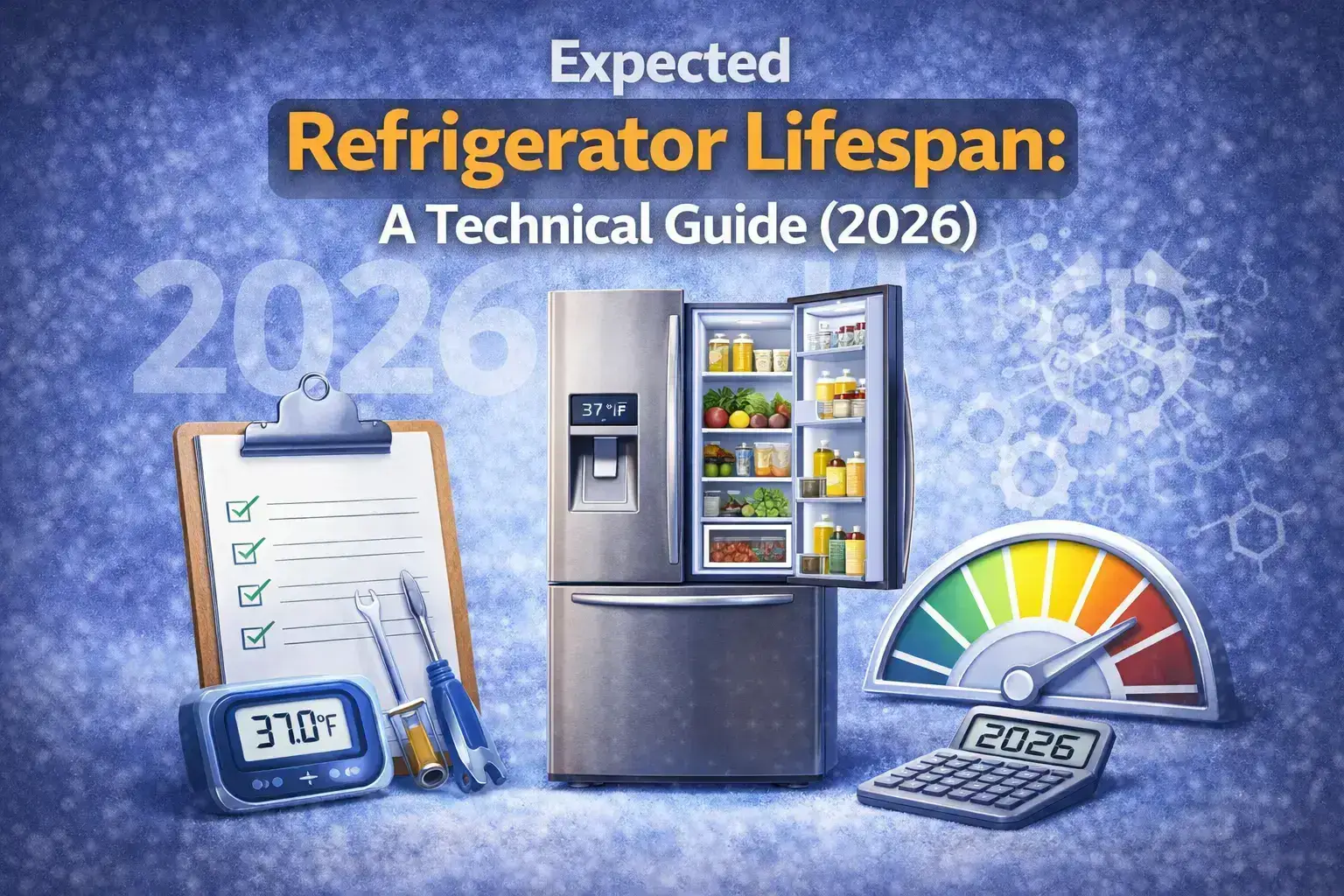
Expected Refrigerator Lifespan: A Technical Guide (2026)

The longevity of a household appliance is a key factor in financial planning and home management. In the unique environmental conditions of the Middle East, understanding the mechanical limits of your cooling systems is essential. The expected lifespan of a refrigerator typically ranges from 10 to 14 years, though high-end units can reach up to 17 years with proper maintenance; however, in the UAE, factors such as high ambient temperatures and fine desert dust often reduce this window to approximately 10 years if the internal systems are not regularly cleared of debris. At Offical Service Center, we prioritize technical transparency, helping homeowners distinguish between a simple component failure and a “terminal” compressor issue.
When a refrigerator reaches the decade mark, its efficiency begins to decline. This isn’t just about the age of the machine; it is about the “wear cycles” of the moving parts inside. This guide provides a factual breakdown of what determines a refrigerator’s life and how to identify when it is nearing the end of its functional utility.
1. Average Lifespan by Configuration
The internal engineering of a refrigerator varies significantly depending on its door style. Generally, simpler designs have fewer points of failure.
-
Top-Freezer Models: 14–17 years. These units use a single evaporator and a straightforward defrost system, making them the most durable category.
-
Side-by-Side Models: 10–12 years. These units often feature through-the-door ice and water dispensers. The complex plumbing and wiring required for these features are often the first parts to fail.
-
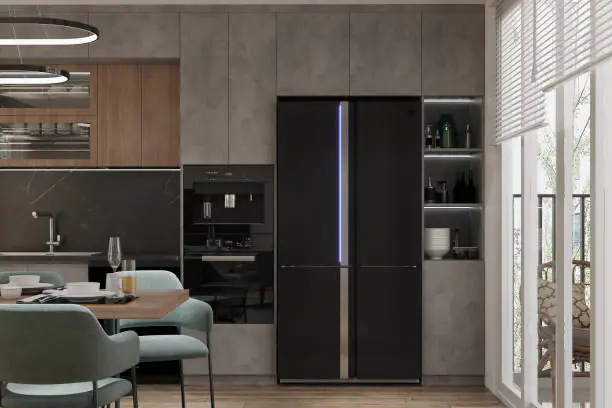
French Door Models: 10–12 years. These are the most technologically advanced, often utilizing dual-evaporators and sophisticated sensors. While they offer superior food preservation, the electronic complexity can shorten the overall lifespan.
2. Factors That Accelerate Aging in the UAE
While a manufacturer might state a 15-year lifespan, regional variables in the Gulf play a significant role in reducing that number.
Heat and Compressor Stress
If the kitchen environment exceeds 30°C regularly, the compressor must run longer to maintain the internal 4°C safety standard. Constant cycling causes the internal valves of the compressor to thin and eventually lose the ability to pump refrigerant efficiently.
Dust Insulation
Condenser coils (located at the back or bottom) are designed to release heat. In dusty environments, these coils become “insulated” by a layer of grime. This forces the motor to run at higher temperatures, which can lead to a premature electrical short.
3. Recognizing the “End-of-Life” Symptoms
If your appliance is over 8 years old, it is important to monitor its performance. Some issues are repairable, while others suggest the “sealed system” is failing.
-
Excessive Heat: If the exterior cabinet feels hot to the touch, the cooling system is overworking.
-
The “Clicking” Sound: A repeated clicking noise usually means the compressor is drawing too much amperage and tripping the start-relay.
-
Silent Operation: If the lights are on but the motor never kicks in, the main control board may have reached its limit.
Technical Note: If your unit is still relatively new but has stopped dropping in temperature, it may not be at the end of its life. Consult our technical guide on refrigerator not cooling: DIY fixes for UAE homes to rule out simple thermostat or airflow issues.
4. The Economic “50% Rule”
Professional technicians at Offical Service Center typically suggest the “50% Rule” for appliances older than 10 years. If the cost of the repair exceeds 50% of the price of a new, energy-efficient model, replacement is the more sustainable financial choice. Modern 2026 models often use 20% to 30% less electricity than units built just a decade ago, leading to significant long-term savings on utility bills.
5. Summary: Maximizing Appliance Longevity
| Action | Frequency | Impact |
| Vacuum Coils | Every 6 Months | Reduces compressor strain by 20% |
| Inspect Gaskets | Every 3 Months | Prevents cold air loss and “sweating” |
| Clear Drain Line | Annually | Prevents rust and interior water pooling |
6. Conclusion
A refrigerator’s lifespan is a variable, not a fixed date. By understanding the mechanical stress placed on the compressor and keeping the airflow paths clear, homeowners can maximize their investment. While 12 years is the global average, the quality of care provided in the first five years largely determines if an appliance will make it to its second decade.
Is your refrigerator approaching its 10th anniversary? A professional diagnostic can determine the “health” of your compressor and help you decide if a proactive repair or a planned upgrade is the best path forward for your home.