



Microwave Lifespan: How Long Do They Actually Last?

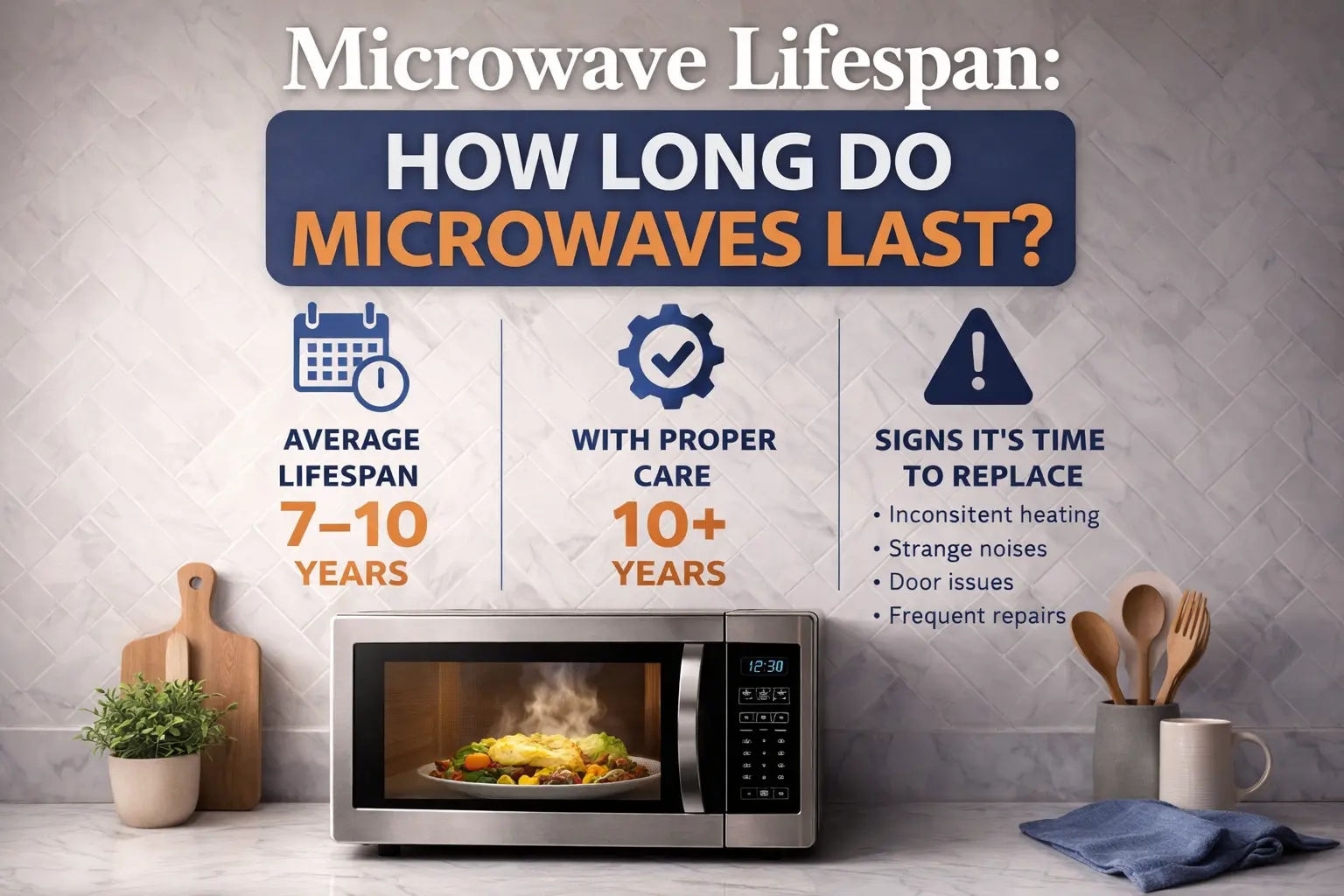
In the landscape of modern kitchen technology, the microwave is a high-precision electronic device that relies on a specific “firing life” to operate. Unlike mechanical appliances that can be overhauled, the core of a microwave has a measurable expiration. The expected lifespan of a microwave is typically between 7 to 10 years, though environmental factors like the high coastal humidity in the UAE can cause sensitive door sensors and magnetron tubes to degrade as early as 5 years if not properly ventilated. At Offical Service Center, we prioritize technical transparency, helping homeowners identify when an electrical hum is a simple fix or a sign of terminal magnetron fatigue.
1. The Engineering of Microwave Longevity
To understand how long a microwave lasts, you must look at its primary power source: the Magnetron. This vacuum tube converts electricity into electromagnetic waves.
-
Cycle Life: Every time you press “Start,” the magnetron loses a microscopic amount of its efficiency. Heavy users (3+ times a day) will typically reach the end of this cycle life closer to the 7-year mark.
-
Built-in vs. Countertop: Built-in models are often engineered with superior thermal management systems, allowing them to consistently reach the 10-year benchmark.
-
Component Aging: Capacitors and transformers inside the unit are sensitive to heat. If the internal cooling fan is blocked by dust, these parts can fail long before the magnetron does.
2. Comparing Durability Across the Kitchen
When evaluating your appliance budget for 2026, it is helpful to place the microwave in context with your larger investments. While a microwave is designed for a decade of service, other appliances are built for much longer duty cycles.
Technical Insight: For a full breakdown of how your microwave’s durability compares to your refrigerator, washing machine, or oven, visit our detailed guide on how long do appliances last to see current industry benchmarks.
3. Red Flags of Impending Failure
At Offical Service Center, we categorize microwave issues into “Maintenance” and “Terminal.” Watch for these three signs that your unit is nearing the end:
Diminished Heating Power
If it now takes three minutes to heat a cup of coffee that used to take ninety seconds, your magnetron is losing its ability to agitate water molecules. This inefficiency leads to higher electricity consumption with lower output.
Arcing and “Sparking”
If you see blue or orange sparks inside the cabinet while the unit is running (without metal inside), the internal waveguide cover has likely carbonized. If not addressed, this will eventually burn a hole through the interior chassis.
Touchpad and Sensor Errors
In the UAE’s humid climate, the ribbon cables connecting your keypad to the main PCB can corrode. If certain buttons stop working or the unit starts by itself, the electronic “brain” of the machine is failing.
4. The Offical Service Center “50% Rule”
Because countertop microwaves have become more affordable, the decision to repair often comes down to economics.
-
The Replacement Rule: If the unit is older than 6 years and the repair estimate exceeds 50% of the cost of a new, energy-efficient model, we recommend an upgrade.
-
The Exception: High-end built-in or Over-the-Range (OTR) models are often worth repairing, as they are integrated into your kitchen cabinetry and are more expensive to replace and reinstall.
5. Maintenance Checklist for 10-Year Longevity
| Task | Frequency | Benefit |
| Interior Wipe-down | After Every Use | Prevents “carbonizing” of food spills. |
| Door Latch Check | Monthly | Ensures safety switches engage correctly. |
| Ventilation Clearing | Quarterly | Prevents the magnetron from overheating. |
6. Conclusion
While the microwave may have a shorter lifespan than a refrigerator, it remains a critical asset for modern convenience. By avoiding “empty runs” and keeping the interior cavity free of grease, you can ensure your unit serves your home for the full ten years.
Is your microwave sparking, buzzing, or failing to heat? High-voltage appliances should never be disassembled by a non-professional. A precise diagnostic can determine if a simple sensor replacement can save your unit or if it’s time to invest in a 2026 model with better energy ratings.
Contact Offical Service Center today for an expert evaluation of your kitchen appliances. We help you make the right choice for your safety and your budget.