




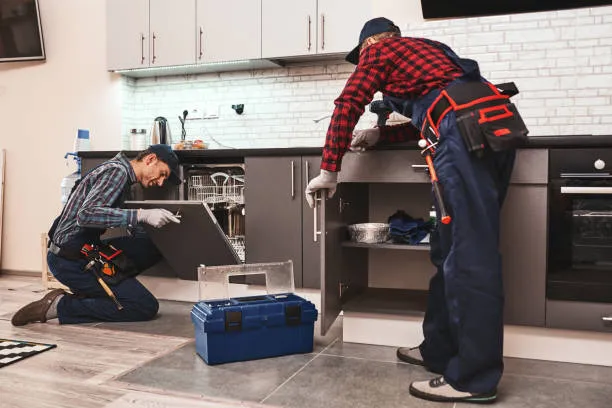
Troubleshooting a Whirlpool Dryer That Is Blowing Cold Air

Whirlpool Dryer Not Heating: Expert Repair Guide
A malfunctioning dryer can quickly disrupt the efficiency of any household. When your machine spins but fails to produce warmth, the issue usually lies within the specialized heating circuit. To fix a Whirlpool dryer that is not heating, begin by resetting your home’s double-pole circuit breaker to ensure the heating element is receiving the required 240 volts; then, use a multimeter to test the thermal fuse and the heating element coils for continuity, as these are the primary components that fail due to restricted airflow.
At Offical Service Center, we prioritize technical accuracy, ensuring that every diagnostic follows strict safety protocols to identify if a component has reached its “firing limit” or if a simple vent cleaning can restore performance.
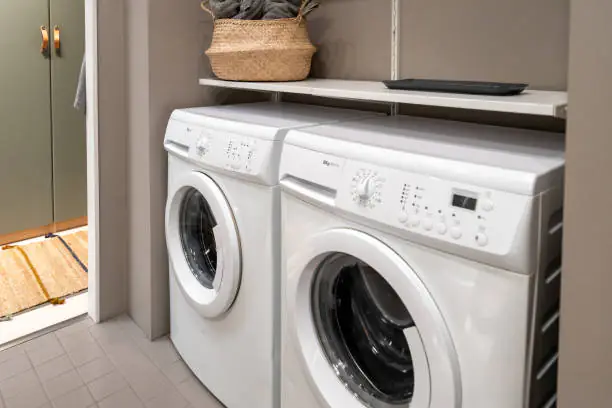
1. Initial Troubleshooting (Simple Fixes)
Before examining the internal electronics, it is vital to rule out external factors that can mimic a mechanical failure.
Verify the Power Source
Electric dryers require significantly more power to generate heat than they do to spin the drum. If one half of your circuit breaker trips, the dryer will appear to work but will only blow cold air.
-
The Fix: Locate your electrical panel and fully flip the dryer breaker to “Off” and then back to “On.”
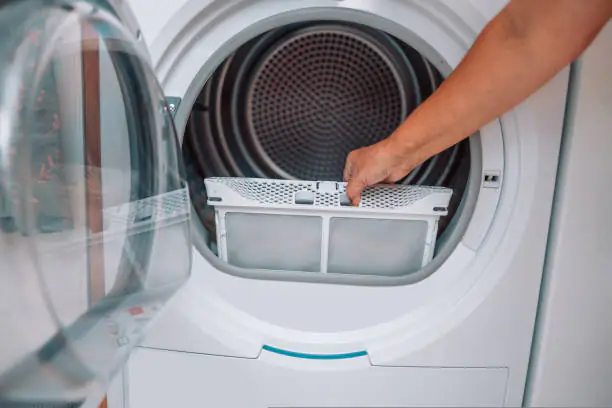
Inspect the Exhaust Path
Airflow is the lifeblood of a dryer. In the UAE’s environment, fine dust can combine with lint to create a thick “felt” that blocks the exhaust vent. This blockage causes the internal temperature to spike, which triggers the safety sensors to shut down the heat.
Note on Dryer Noises: If your machine is also producing unusual sounds while running, it is worth investigating potential mechanical strain. You can learn how to to ensure your motor and belt are operating efficiently.
Common Internal Component Failures
If the power and airflow are clear, the issue is likely a failed safety or heating component.
The Thermal Fuse
This is a single-use safety device. If the dryer gets too hot, the fuse “blows” to prevent a fire. Once this happens, the circuit to the heating element is permanently broken until the part is replaced.
The Heating Element (Electric Models)
The heating element consists of a metal coil that carries an electric current. Over time, these coils can become brittle and snap. Even a hairline fracture in the coil will prevent the dryer from getting hot.
Gas Valve Solenoids (Gas Models)
On gas-powered Whirlpool units, solenoids are electromagnetic coils that open the gas valves. If they fail, the igniter may glow, but the gas will never be released to create a flame.
Frequently Asked Questions (FAQs)
Why is my Whirlpool dryer blowing cold air?
This typically indicates a blown thermal fuse or a broken heating element. It means the safety system has cut power to the heat source while allowing the motor to continue spinning the drum.
How much does it cost to repair a dryer that won’t heat?
The cost varies based on the component. A thermal fuse is a cost-effective repair, while a main control board or a full heating assembly is more intensive. Contact Offical Service Center for a precise, technical diagnostic.
Can I reset the thermal fuse?
No. Thermal fuses are designed to be “sacrificial” parts. Once they are triggered by excessive heat, they must be replaced with a new OEM part to ensure the safety of the appliance.
Conclusion
A Whirlpool dryer that fails to heat is often a sign that the machine’s safety sensors have detected a problem, such as an airflow blockage or an electrical surge. By following a structured diagnostic path—starting with the circuit breakers and moving to the internal fuses—you can determine the most efficient path to repair.
Is your laundry still damp after a full cycle? Dealing with high-voltage heating elements requires specialized tools and expertise. A professional diagnostic can identify the exact point of failure, saving you from unnecessary part replacements and ensuring your home remains safe.